
Over 150 people gathered in Edinburgh yesterday evening to celebrate the impact of knowledge sharing between businesses, colleges, universities and research institutes.
Now in their fifth year, the Scottish Knowledge Exchange Awards showcase the achievements of colleges and universities working together with industry to create jobs and economic growth.
The awards were presented by Ivan McKee MSP, Minister for Trade, Investment and Innovation. Speaking after the ceremony, he said:
“I’d like to congratulate all the nominees and winners who have been recognised for their outstanding work at the Scottish Knowledge Exchange Awards.”
“Not only do these awards celebrate activities and projects happening all over Scotland, they bring people together and create new collaborations and partnerships. Their innovation plays a crucial role in boosting productivity and creating sustainable economic growth for the country.”
The winners were chosen by a panel of expert judges who were looking for projects that demonstrated innovation and transformation, as well as individuals who go above and beyond in their contribution to knowledge exchange.
More information and full details of all the winners can be found on the Interface website.
Scotland’s Deputy First Minister, John Swinney, has announced up to £9.5 million of new funding to strengthen Scotland’s position in precision medicine, an industry estimated to be worth over £100 billion by 2025. The announcement was made at a gathering of academics and business leaders that took place today in Perth.
The funding will be invested over the next five years by the Scottish Funding Council and Scottish Enterprise. It will support the growth of precision medicine in Scotland through industry-led projects managed by the Precision Medicine Scotland Innovation Centre (formerly the Stratified Medicine Scotland Innovation Centre). The initiative’s backers believe that precision medicine – where medical decisions, treatments, practices, and products are tailored to individual patients – can also deliver substantial savings for the NHS in Scotland.
Speaking ahead of today’s event, the Deputy First Minister said:
“Scotland has the potential to be a world leader in the field of precision medicine and this new £9.5 million investment will build on the success of our earlier work within phase one.
“The funding announced today – £7.5 million from the Scottish Funding Council and up to £2 million from Scottish Enterprise – will be used to support the use of precision medicine in the NHS and to accelerate the growth of the industry in Scotland.
“It will also be used to promote the progress Scotland has made within precision medicine and attract people with the right qualifications and skills to work and study within the field here.
“Precision medicine offers significant health benefits by tailoring medical treatment to individual patients but it also provides economic benefits including increased turnover and job creation and enhanced levels of collaboration between industry, the education sector and the NHS.
“The Scottish Government is committed to accelerating the development and implementation of precision medicine to bring health and wealth benefits for generations to come.”
The newly launched phase 2 of the Precision Medicine Scotland Innovation Centre will continue to act as a catalyst for partnerships between industry, academics and clinical experts. In phase 1 the Innovation Centre produced a number of large scale exemplar projects in areas including ovarian cancer, rheumatoid arthritis, oesophageal cancer and multiple sclerosis.
The Precision Medicine Scotland Innovation Centre will use the funding announced today to support the implementation of precision medicine in the NHS and to accelerate the growth of the industry in Scotland. It will also work to raise Scotland’s international profile in the field of precision medicine and increase the number of people with the qualifications and skills required by the industry.
Marian McNeil, Chief Operating Officer of the Precision Medicine Innovation Centre, said:
“Precision Medicine offers the opportunity to improve how patients are treated and this will bring savings for the NHS in Scotland which have been estimated to be in the region of £70 billion over a period of 50 years. There are currently around 230 Scottish companies working in this area and this investment opens the door to further growth in jobs and investment.”
In addition to the funding from the Scottish Funding Council and Scottish Enterprise, the Precision Medicine Innovation Centre expects to be able to attract around £4.2 million of income from other sources.
A £6.7 million digital network to improve access to training for students from across the South of Scotland has been launched today by Deputy First Minister, John Swinney.
The network is the result of a collaboration between the Scottish Funding Council, Dumfries and Galloway College, Scottish Borders College, and the South of Scotland Enterprise Partnership. It is funded by the Scottish Government.
The network will use a ‘hub and spoke’ approach to extend access to quality training and learning opportunities across the region. Hubs focused on Care, Renewable Energy, Construction and Engineering will be based at college campuses in Dumfries, Galashiels, Stranraer and Hawick, allowing students to participate in classes online.
Spokes will be located in high schools, community facilities and business premises enabling more students to participate in learning opportunities across the region.
Launching the network, Mr Swinney said:
“The South of Scotland Skills and Learning Network will broaden access to teaching for students and learners of all ages right across the region.
“With a clear focus on areas that have growing regional job opportunities, the ability to develop key skills without having to relocate will provide so many more people with an excellent start to their careers, or the chance to retrain to branch out into new areas.”
A report published today (6 February 2020) by the Universities and Colleges Admissions Service (UCAS) has underlined the strong international reputation of Scotland’s universities.
Scotland’s universities have seen an increase in applications of 2.5% compared with last year, the main driver being an increase in applicants from outwith the EU – applications from outwith the EU increased by 20% compared with last year.
The report also highlights that there has been a slight narrowing of the gap between the least advantaged and the most advantaged students – 16.8% of all Scottish-domiciled applicants were from SIMD20 areas, a 0.4 percentage point increase on last year.
A full copy of the report can be found on the UCAS website.
Gender policy experts from universities and colleges across Scotland met this week to discuss progress towards gender equality and share plans for new initiatives.
The Scottish Funding Council’s 2020 National Gender Conference focused on a series of topical issues, including supporting survivors of gender based violence, challenging gender stereotypes in childcare and improving support for transgender students.
Speaking at the Conference, Dr Veena O’Halloran, a member of the Scottish Funding Council’s Board, said: “#metoo and Samira Ahmed’s successful pay claim for gender discrimination are stark reminders that gender equality is still a very real concern. Change is possible but we need to support universities and college to achieve that change.”
The conference was addressed by Professor Karen McCloskey from Queen’s University Belfast, an institution recognised internationally as a leader in gender equality.
In her keynote speech Professor McCloskey described gender action plans as the bridge between where we have come from and where we want to go. Noting that: “Culture can eat a gender action plan for breakfast” she went on to stress the need for a supportive and inclusive culture. She also spoke about the importance of “gender champions” to provide a hub of innovation and sustain gender action plans.
A recurring theme at the conference was the need for effective leadership and the Scottish Funding Council has recently established a leadership network for those responsible for Gender Action Plans in Scottish colleges and universities.
Next year’s UK-wide assessment of university research excellence (REF 2021) will see a substantial increase in the number of staff providing submissions.
Information collected from universities ahead of next year’s exercise shows that they plan to submit the work of more than 74,500 full-time equivalent staff compared with a figure of just over 52,000 for REF 2014. This is in response to one of the key recommendations of Lord Stern’s independent review of university research funding. The review called for all staff with a significant responsibility for research to be submitted for future assessments.
Stuart Fancey, Director of Research and Innovation at the Scottish Funding Council, said:
“These figures indicate that we are heading for a submission level of around 75% of all eligible staff. This marks a significant move away from the more selective approach taken for REF 2014 and is a major step towards meeting Lord Stern’s recommendation of the widest possible assessment of quality research, with its benefits for research staff development.”
In setting the overall number of outputs required for submission, the four UK funding bodies behind REF 2021 aim to ensure that the workload of the evaluation panels remains manageable. According to the data now available the overall number of outputs anticipated for submission will rise by just 2%. The number of impact case studies is also expected to be similar to REF 2014.
The greatest increase in the volume of staff to be submitted is expected to be in the social sciences.
Students from Scotland’s most deprived areas are significantly less likely to study at postgraduate level and even with a postgraduate qualification they will not have the same career opportunities.
The finding comes in a new discussion paper from Professor Sir Peter Scott, Scotland’s Commissioner for Fair Access. The paper focuses on the interplay between where people obtain their first degree, the subjects they studied and what happens to them after their postgraduate qualification.
According to the Commissioner, the gap in continuation to postgraduate study is partly explained by students from deprived areas being more likely have graduated in a subject where fewer students go on to take a postgraduate course. Sir Peter argues that another factor is the concentration of socially deprived students in universities with lower rates of progression to postgraduate studies. Finally, he points to evidence of discrimination that reaches beyond school and university and into the professions.
According to Sir Peter, inequality in postgraduate education will continue unless there is a better spread of socially disadvantaged students across a wider range of subjects, including those such as law and the physical sciences which have the highest progression rates to postgraduate study.
The Commissioner’s paper, Access to postgraduate study – representation and destinations, is now available on the Scottish Government’s website.
New targets have been set for Scotland’s college and university sectors as part of a national ambition to reduce the gap in outcomes between care-experienced students and their peers so that there is parity by 2030.
The Scottish Funding Council’s (SFC) National Ambition for Care-Experienced Students, published at an event to mark the launch of the Action for Children STAY programme, calls for the intake of care-experienced students to be at least 1.6% of the total number of individual students at college, and 1.4% of Scottish-domiciled undergraduate entrants at university by 2022-23.
1.4% of under 18s are care-experienced, yet they only made up 0.9% of Scottish-domiciled undergraduate university entrants in 2017-18, and while they account for 1.6% of total student headcount in FE courses in the college sector, this falls to 0.8% for HE courses) in the college sector in 2017-18.
SFC’s National Ambition also sets targets for reducing the gap in educational outcomes between care-experienced students and those who are not care-experienced.
At all levels, care-experienced students have lower success rates than those who are not care-experienced. In 2017-18 there was a difference of 6.0 percentage points for retention to year two of full-time Undergraduate courses at university, while for full-time FE courses at college the gap in successful completion was 15.6 percentage points. The vision is for equal outcomes by 2030.
SFC Chief Executive Karen Watt said:
“We believe that all of Scotland’s young people should have equal opportunities to access and succeed in further and higher education irrespective of their background. Care-experienced young people and adults include some of the most vulnerable and disadvantaged in our society but they often have the most untapped talent and potential.
“We want to continue to increase the intake of care-experienced students, no matter their age, and improve the positive outcomes of Scotland’s care-experienced students so there is no difference with their peers.
“We look forward to working with our colleges, universities and other corporate parents to achieve the targets and to bring impactful, sustainable and positive change.”
In addition to the National Ambition, SFC also works closely with the college and university sectors, agencies, and organisations such as Who Cares? Scotland to improve the outcomes of care-experienced learners and equality with their peers.
Claudia MacDonald, Director of Influencing at Who Cares? Scotland said:
“We are really delighted to welcome this updated National Ambition for Care-Experienced Students. It is one of a range of positive additional steps towards achieving educational parity between these students and their peers.
“We’re particularly encouraged that targets have now been set on articulation for care-experienced students and we hope to see even more of these students utilising articulation pathways to achieve a degree.
“We know from our members, and the Learner Journey Review, that too often articulation is disjointed and difficult for many care-experienced students to navigate.
“All of us at Who Cares? Scotland look forward to our continued work with SFC, colleges and HEIs to support the achievement of the National Ambition, ensuring that our members are alongside it, guiding and informing it becoming a reality for care-experienced students across the country.”
Care-experienced perspectives
To coincide with the launch of SFC’s National Ambition for Care-Experienced Students, we hear from two care-experienced students about their journey, courtesy of HUB for SUCCESS.
Launched in 2019, HUB for SUCCESS is a partnership of Edinburgh’s universities, colleges and the local authority to increase the educational opportunities open to people who have spent time in care.
The HUB for SUCCESS (Support for University and College for Care-Experienced in South-East Scotland) operates from the City of Edinburgh Council Customer Hub in the Royal Mile. It provides individual information and advice on education opportunities, accommodation and finance, both on a drop-in basis and by making home/campus visits.
Care-experienced student Gary Gallacher’s interest in maths began in primary school.
“I was diagnosed with ADHD and I found an unusual way to settle myself and keep my interest – with a calculator and maths problems.
“Although I found the maths problems easy, it was the other problems I found difficult to manage. Things were tough at home, my Mum worked a lot to keep us afloat, but this meant that she wasn’t home much. In early secondary school I went into informal kinship care, and found myself moving between my Auntie’s, my Mum’s and also my Dad’s.
“This meant that it was difficult for any one person to keep an eye on my education – to spot my interests or encourage me to think about what I was and am capable of. No one ever spoke to me about university as an option or what it was like. Despite showing academic ability in maths I was encouraged to become a bricklayer.
“Moving on from school was not linear. I had personal addiction issues, left school and I ended up moving to England at the age of 16, on my own. School were encouraging and always said that the door was open – this was important. I went through homeless accommodation then back to school for a bit. I had no contact with the local authority but there was a charity worker who turned up at the homeless accommodation to provide some support.
“I ended up very unwell, jumped off cliff and was in coma for 8 – 9 days. I returned to school using a Zimmer frame and was on so much medication that I would fall asleep at the back of the class.
“My guidance teacher was a great support and was happy for me to just fall asleep at school if this meant I was in a safe place. I then went into rehab in 2011 and went back to school for a third time! Unfortunately something happened and I got lifted by police outside school. And that was my final time attending school.
“After another tricky spell things turned around and I studied some Highers, then went on to North Highland College to study HNC Accounting.
“After submitting my UCAS application, Heriot-Watt University gave me a conditional offer – I needed a B in my graded unit, but I got an A.
“After six years of study with Heriot-Watt I have a First-class honours degree BSc (Hons) Maths, Statistics and Actuarial Science. I got an award from the Maths department for exceptional contribution to the department and I am now studying a MSc in Actuarial Management at HW.”
Nicky is a third year student at Edinburgh Napier University studying Disability Nursing.
“My goal is to work with the Looked After and Accommodated Children (LAAC) nursing team in Edinburgh. However, my journey was far from easy.
“Like many Care-Experienced people – I came to education late. Having attended seven secondary schools, I left school with no formal qualifications. I enjoyed drama and music, I am creative, but I also have ADHD and dyslexia which makes academic study so much more challenging.
“After a very challenging childhood, spent being looked after by many other people, I found myself caught in a cycle of addiction , I am however, resilient. I did a counselling course it was here that I found recovery which helped me discover who I am and that gave me confidence to study.
“I started my journey with The Women into Work course and then Access To Industry. The support here allowed me the time and space to start studying – but it also gave me the confidence to believe in myself and continue in my recovery.
“I undertook a placement in a school as a support assistant as part of the Women onto Work course and this added to my thirst for education. Graduating from my other achievements also boosted my confidence and added to my skill set. I went on to take the HNC in Social Services at Edinburgh College and it was here that for the first time in my life, someone spoke to me about University. No one else had ever done this with me – how could that happen?
“I am now in my final year and the biggest thing that drives me and keeps me motivated is for my family to see me studying. Because of this my son is now at college – it gave him hope and I am incredibly proud of that.
“I have often thought about giving up. I really found the financial aspects difficult to manage and it was during my second year I found the HUB for SUCCESS.
“If it wasn’t for them and the additional help they gave me – I honestly don’t think I would be here now. My recovery from addiction continues.
“My dream is to get a job on graduation, buy a house of my own and give my family every opportunity to succeed and be happy.”
The Scottish Funding Council has today (8 January 2020) announced the appointment of Donna MacKinnon as the new Director of Access, Learning and Outcomes. The appointment follows a recruitment process that attracted a strong field of high calibre candidates.
Donna joins SFC from the Scottish Government where, most recently, she has been Deputy Director and Head of Community Justice. With 13 years of experience in the Scottish Government across justice, health and local government, she brings with her both a breadth of policy expertise and a background in research, statistics and analysis.
Early on in her working life, Donna spent five years as a lecturer in sociology and history and as a researcher in youth culture, education and employment, with a focus on rural areas.
Commenting on the appointment, Karen Watt, SFC Chief Executive, said:
“We are delighted to welcome Donna to SFC. From her time in the university sector and within a broad range of roles in Scottish Government, she brings with her a wealth of valuable skills and experience which will help SFC deliver our mission to shape the future of learning, skills, research and innovation in Scotland.”
Donna will join SFC in March 2020.
2019 was a busy and varied year at the Scottish Funding Council. Here, month by month, is a selection of articles that highlight the diversity of our work. Alongside the expected – innovation, widening access and skills development – are stories that reflect some of the more surprising things we do.
 January – green energy: We began the year in which the Scottish Government would declare a climate emergency with a story about green energy. SFC-funded Interface matched Renewable Parts Ltd (RPL) with the University of Strathclyde. Their joint project focused on improving RPL’s ability to remanufacture components used in wind turbines – making the green energy industry even greener.
 February – sport: In February SFC-funded Scottish Students Sports announced the finalists of the 2019 Queen’s Park Shield. In all its 92 years this student football tournament had never been won by a college team and for the first time ever a college team had reached the final. SFC-funded Scottish Student Sports organises the tournament and invited My SFC to the big game a few weeks later when Edinburgh College won an historic victory over the University of Edinburgh.
 March – food: March saw the opening of a £1.6 million, SFC-funded animal disease surveillance centre. The centre is part of Scotland’s Rural College and is capable of analysing more than a million samples a year using robotics alongside human expertise. Its work will help to protect the food we eat by diagnosing animal disease more quickly and more reliably than was previously possible.
 April – Scotland’s digital future: EIT digital, a leading European organisation for digital innovation, arrived in Scotland thanks to a joint investment from SFC and Scottish Enterprise. Speaking at its launch at the University of Edinburgh’s Bayes Centre, Scottish innovation minister, Ivan McKee, said: “Regardless of the outcome of Brexit, Scotland will continue to be an outward-looking, open and welcoming country.
 May – fair access to university: SFC’s Report on Widening Access showed a record increase in entries to university from Scotland’s most deprived areas. It also showed that twelve universities had exceeded their 2021 target to have at least 10% of full-time first degree entrants from the most deprived areas. Talking about the report, Education Minister, Richard Lochhead, said: “Overall, that means many more people in Scotland – no matter what their background or circumstance – are benefitting from higher education, giving them an equal chance of success”.
 June – art: The long reach of SFC’s museums, galleries and collections grant extended to the Easter Ross village of Balintore this month. A grant to the University of St Andrews allowed experts to restore and display the work of John Paterson, a local fisherman and artist. His recently re-discovered paintings depict sea faring communities in the late 19th and early 20th centuries. The restored paintings were shown for the first time as part of the 2019 Fisherfolk Festival.
 July – innovation: Interface, the organisation funded by SFC to help businesses collaborate with Scotland’s universities and colleges, passed a significant milestone this month when it announced it had awarded over £6 million worth of innovation vouchers. Karen Watt, Chief Executive of SFC said: ” Across key industry sectors like energy, food and drink and tourism collaborations brought about through these vouchers have created new products, provided new services and supported new jobs.”
 August – drama: The Scottish Funding Council played a supporting role in the 2019 Edinburgh Festival Fringe. The SFC-funded Scottish Drama Training Network (STDN) partnered up with the Grid Iron theatre company and the Pleasance Theatre to present The Brunch Club. Described by The Stage as “a play filled with heart, humour and energetic characters”, The Brunch Club won plaudits from the Scottish Theatre Awards on the Fringe which awarded it a prestigious Bright Spark Award.
 September – research talent: In September SFC was one of the first organisations to sign a new pledge to support university research careers. Under the new concordat, research institutions in the UK will be expected to provide staff with opportunities to develop their careers and broaden their leadership skills. The concordat will also play a vital role in improving the security of employment for researchers by reducing the use of fixed, short term contracts and introducing flexible criteria for maternity and paternity benefits.
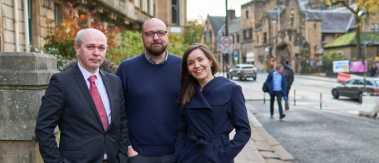 October – Gaelic language: There was good news for students of Gaelic in October when the Scottish Funding Council announced £455,000 to establish a new Gaelic language immersion year. Based in the main University of Glasgow campus, the new immersion course will involve eight months of intensive language tuition. This will be followed by a three-week residential experience in South Uist, one of the strongest Gaelic-speaking communities in Scotland.
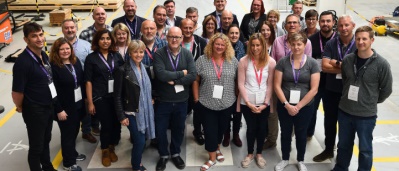 November – future skills: Scotland’s largest college innovation project received £307,605 from SFC via the Scottish Government’s College Innovation Fund. FUTUREquipped brings together college lecturers from the construction; health and care; and information technology industries to work with businesses on future-proofing skills; training; and workforce development. Professor George Crooks OBE, Chief Executive of the Digital Health & Care Institute which co-led the project, said: “We need to build on this type of initiative, which recognises that the world of work does not stand still”.
 December – gender: We rounded off the year by announcing details of our 2020 National Gender Conference. The conference reflects a commitment made when we published our Gender Action Plan that we would hold an annual gender conference. The idea behind the conference is to share and celebrate good practice within the sector and promote the themes of SFC’s Gender Action Plan. The conference is just one example of how SFC will begin the next decade by working hard for equality and diversity.
Consultation is now open on the process for managing complaints and investigations relating to Research Excellence Framework 2021 Codes of Practice.
The online consultation form is now live at https://www.surveymonkey.co.uk/r/YFG7DSM.
Responses are due by 6 March 2020.
The UK funding bodies are seeking the views of the sector on the appropriateness and clarity of the draft REF 2021 complaints and investigations (C&I) process, to ensure that a range of views from a variety of stakeholders are considered in finalising the process.
The purpose of the C&I process is to provide assurance to the UK funding bodies that codes of practice are applied as set out by institutions participating in REF 2021. This assurance helps meet the obligations of the UK funding bodies concerning equality, diversity and inclusion.
Each institution making a submission to REF 2021 is required to develop, document and apply a code of practice on the fair and transparent processes used for making key decisions in their submissions to the exercise.
In the REF 2021 publication ‘Guidance on codes of practice’ (REF 2019/03), the UK funding bodies committed to putting in place measures to enable individuals to make a formal complaint where it is believed that the agreed processes set out within a code of practice are not being followed by an HEI.
For further information about REF 2021 see www.ref.ac.uk.
For further information about the REF COP see https://www.ref.ac.uk/publications/guidance-on-codes-of-practice-201903/.
The Scottish Funding Council (SFC) has responded formally to the findings of the Equalities and Human Rights Commission (EHRC) Inquiry on racial harassment in universities. In a letter to John Wilkes, Head of EHRC in Scotland, SFC acknowledged that the findings made difficult reading but welcomed the focus being given to the impact of racism on campus.
When the findings were first published SFC was quick to respond, recognising the seriousness of the issues the report raised. We were the first organisation to engage with the EHRC and jointly hosted a seminar bringing together representatives from the university sector and the Scottish Race Equality Network.
Feedback from this event has helped to shape SFC’s formal response to the Inquiry and we have now committed to:
- Work with Advance HE to develop resources so that institutions have access to a range of tools to raise awareness of racism and tackle unacceptable behaviours.
- Work with partners to support staff and students to have conversations about race and racism with greater confidence.
- Place increased focus on the reporting requirements of the Public Sector Equality Duty to enable us to examine and monitor the steps taken by institutions to increase the protection from harassment afforded to students.
- Work with partners to identify persistent inequalities to help set measurable evidence based equality outcomes.
- Ensure that the mental health counselling provision offered is culturally competent and meets the needs of all individuals.
- Work with the Office for Students during the consultation on the National Student Survey to ensure the views of students studying at Scottish institutions are taken into account.
At the heart of these actions is a commitment to work with partners to ensure that this work is properly informed and directed by staff and students who have lived experience of racism.
Commenting on SFC’s response to the EHRC Inquiry, Karen Watt, SFC Chief Executive said:
“Everyone should have the opportunity to work and learn without being exposed to racial harassment. The findings of the EHRC Inquiry were deeply disappointing and SFC is responding quickly and decisively to act on the recommendations.
We look forward to working with our partners to deliver on our commitments and make it absolutely clear that racial harassment has no place in Scotland or our institutions.”
Registration is now open for the Scottish Funding Council’s (SFC) annual national gender conference.
Date: Monday 27 January 2020
Venue: DoubleTree by Hilton, Glasgow Central
Cost: Free
This year’s conference is an opportunity to share and celebrate good practice within the sector, and provide practical actions that can be taken back to institutions to advance and promote the themes of SFC’s Gender Action Plan. We are pleased to confirm Professor Karen McCloskey, Director of the Queen’s Gender Initiative at Queen’s University Belfast as our keynote speaker.
In 2016, SFC published our Gender Action Plan. In it we committed to hold an annual conference to bring together representatives from the sector to reflect on progress and share plans for improvement. This event is targeted at practitioners, researchers, academics, senior managers, policy-makers working in or with Scotland’s colleges and universities, and students, as well as relevant organisations with an interest in this area.
Register for the conference. Registration closes on 20 January 2020.
A report on universities’ role in driving innovation in Scotland has been published today by Professor Sir Anton Muscatelli, Vice-Chancellor of the University of Glasgow.
Commissioned by the Scottish Government, the Muscatelli report looks at universities’ engagement with industry and their contribution to economic growth. It sets out 22 recommendations for driving innovation in Scotland.
Commenting on the report, SFC Chief Executive Karen Watt said:
“SFC welcomes this report as an important contribution to the national debate on how to best support Scotland’s economic prosperity.
We have seen many successful partnerships between industry and academia thanks to the quality of Scottish research and initiatives such as our Innovation Centres and organisations like Interface.
The recommendations in this report provide an opportunity to build on that success, and Scotland’s reputation as a nation of innovators. We look forward to considering the report with higher education institutions and our enterprise and skills sector partners.”
A record number of Scottish colleges and universities were amongst the finalists for the 2019 Green Gown Awards.
Six colleges and six universities represented Scotland’s further and higher education sectors at last night’s awards ceremony which took place at the Glasgow Science Centre.
Now in its fifteenth year, the Green Gown Awards bring together the most inspirational environmental projects from institutions across the UK and Ireland. At the end of the evening Scottish colleges and universities were winners in 6 of the 14 award categories.
As winners of the Student Engagement and the Benefitting Society awards, the University of Strathclyde and Ayrshire College will both go forward to compete in the International Green Gown Awards. In the Campus Health, Food and Drink category Dundee and Angus College and the University of Edinburgh shared the honours as best small and best large institution.
The University of Edinburgh added two further awards to its green trophy cabinet winning the award for Total Reporting and the large institution award in the Money for Good category. Finally, the prestigious Campus of the Future Award went to the University of the West of Scotland for its new Lanarkshire Campus. The campus is powered on 100% renewable energy from a nearby windfarm and features rainwater harvesting technology, making it one of the greenest campuses in the UK.
Iain Patton, CEO of the award organisers EAUC, said:
“The submissions this year were of an incredibly high calibre, tackling a huge array of development areas. It was a hard process to pick the winners, and it involved over 90 national and international judges.”
A planning application has been submitted for the development of the National Manufacturing Institute Scotland (NMIS).
NMIS is a £65 million, industry-led international centre of manufacturing expertise led by the Scottish Government in partnership with its enterprise and skills agencies, the University of Strathclyde and Renfrewshire Council.
Operated by Strathclyde, as a national facility for Scotland, it is where research, industry and the public sector work together to transform skills, productivity and innovation to attract investment and make Scotland a global leader in advanced manufacturing.
It provides a focal point for applied manufacturing research, innovation and skills expertise from all over Scotland, thereby strengthening Scotland’s reputation for R&D and attracting inward investment.
The services and support that NMIS will provide will be shaped by industry. Through elements such as a Skills Academy, Digital Factory 2050, and an ‘Innovation Collaboratory’, NMIS will provide a focal point to connect business with manufacturing research, innovation and skills expertise from colleges and universities all over Scotland.
NMIS is led by the Scottish Government in partnership with Scottish Enterprise, Highlands and Islands Enterprise, Skills Development Scotland, the Scottish Funding Council, the University of Strathclyde, and Renfrewshire Council.
More than £65 million is being invested in the centre, including £8 million by Strathclyde, which is the facility’s anchor university, and £48 million by the Scottish Government.
SFC has provided £400,000 this year (from a total of £1.5M), over three years to support an NMIS PhD Programme and a CPD programme. The funding to support this comes from the Scottish Government and will deliver 30 industry doctorate projects designed specifically around industry needs, and provides a pathway for Scottish universities to collaborate on skills provision and the delivery of solutions to industry challenges and opportunities in advanced and digital manufacturing.
SFC has renewed its memorandum of understanding with NHS Education for Scotland (NES), following a meeting of both organisations this week.

SFC Chief Executive Karen Watt, NES Chair David Garbutt, NES Director
of Medicine Prof Stewart Irvine, SFC Chair Mike Cantlay
The NES and SFC chairs first agreed to sign a memorandum of understanding (MoU) between the two organisations and to develop a joint action plan in 2008. This was renewed in 2016, and now for a further three years.
The focus of the joint action plan is to advise and support Scottish Government in progressing key policy areas such access and participation to health and social care professions. It is also intended to support the health and education sectors in addressing changes to the NHS workforce across all professional and occupational groups.
In related news, the Digital Health & Care Institute (DHI) hosted a reception to award the winners of Andy Murray’s 2019 #DigiInventorsChallenge and promote the launch of the 2019 Digital Health & Care Fest Conference.
The launch was attended by Ivan McKee, Minister of Trade, Investment and Innovation to present the winners – a team of four girls from Marr College – with their award for ‘Shake It Up’, an app that allows users to pre-order school lunches on their mobile phone.
Aimed at encouraging other pupils to make healthier choices, the app is designed to link with the school’s ordering system, enabling users to earn school house points and is also linked to pupils’ Young Scot Cards so they can earn points and prizes for selecting healthy meals at lunchtime.
The Scottish Aquaculture Innovation Centre (SAIC) has received a £10 million, five-year funding package to support the sustainable growth of the sector and re-affirm Scotland’s position as a global leader in innovation and seafood production.
The investment, provided by the Scottish Funding Council, Scottish Enterprise, and Highlands and Islands Enterprise, is expected to be supplemented by an additional £3.5 million secured from third parties, ranging from competitive grants to income generated through services.
During its first five-year phase, SAIC turned its initial project funding package of £6.75 million into a portfolio valued at £42.6 million, spread across 47 initiatives. Of the total figure invested, £33.8 million came from industry and other partners – leading to the creation of more than 200 jobs, largely in rural areas. SAIC also supported the development of the aquaculture talent pool by funding the studies of 92 MSc and PhD students.
SAIC played a key role in the development of the Aquaculture Growth to 2030 strategy, the industry’s plan to sustainably double the sector’s economic contribution from £1.8 billion in 2016 to £3.6 billion by 2030. The innovation centre has also brokered relationships between the industry and its stakeholders, particularly through the establishment of the Aquaculture Industry Leadership Group (AILG).
Richard Lochhead, Minister for Further Education, Higher Education and Science, said:
“Scotland’s Innovation Centres have the potential to have a transformational effect on our economy.
“The Government is working hard to ensure the aquaculture industry continues to thrive, and today’s announcement means the Scottish Aquaculture Innovation Centre will remain a catalyst for growth in a key national industry which enjoys international success, securing future jobs and sustainable economic growth.”
David Gregory, Chairman of SAIC, said:
“SAIC was built to do things differently. We have sought to act as a fulcrum for industry, the public sector, and academia, bringing together everyone with an interest in aquaculture for the good of the Scottish economy. We have also helped the industry deal with some of its biggest challenges – which individual businesses, or even groups of companies, wouldn’t have been able to tackle on their own – through access to academic expertise and applied research.”
In its Phase 2 strategy for the next five years, SAIC said it plans to:
- Drive innovation by leveraging new sources of funding and bringing together multiple partners from across the UK.
- Develop aquaculture skills and talent across Scotland through a focussed programme.
- Share innovation throughout the industry by organising workshops, conferences, and disseminating information in new ways over the next five years.
David added:
“Over the next five years, we will build on Scottish aquaculture’s existing foundations to establish a low-carbon, hi-tech, data-rich, and cutting-edge sector that is led by pioneering research aligned with genuine industry need.”
Photo caption: College lecturers from the FUTUREquipped project.
College lecturers from across Scotland have come together to produce a set of innovative new learning materials that combine speciality knowledge and insight on smart housing from three different sectors.
The new learning materials are a product of FUTUREquipped, Scotland’s largest college innovation project to-date.
Co-led by the Digital Health & Care Institute (DHI) and Construction Scotland Innovation Centre (CSIC), the FUTUREquipped project brought college lecturers from the construction, health and care, and information technology fields together to work with business on future-proofing skills, training and workforce development.
This included the development of 16 new ‘micro-lessons’ on smart housing, which uses automation and sensor networks to control everything from light switches to heating. The lessons are aimed at developing learners’ understanding of how the three sectors overlap in smart housing, and topics include energy efficient construction, dignity and privacy implications for the use of digital healthcare tools in the home, and ‘meta-skills’ like creativity.
The collection, graded at SCQF Level 6, is hosted by the University of Strathclyde’s Open Access repository Strathprints under a Creative Commons licence meaning it can be accessed from anywhere and downloaded by anyone.
FUTUREquipped received £307,605 from SFC via the Scottish Government’s College Innovation Fund. The project involved over 500 students and 30 college lecturers from 13 colleges. In addition to DHI and CSIC, a further two innovation centres were involved – The Data Lab and Centre for Sensor and Imaging Systems (CENSIS) – alongside a pool of industry and education stakeholders who provided input and support.
Karen Watt, Chief Executive of the Scottish Funding Council (SFC), said:
“Colleges are playing an essential part in realising Scotland’s ambition to turn innovation into jobs and prosperity for the future. FUTUREquipped is a fantastic example of this in action, with colleges connecting with business and innovation centres to develop practical resources and education programmes to enhance Scotland’s future skills needs and workforce.”
Professor George Crooks OBE, Chief Executive of the Digital Health & Care Institute said:
“This has been a ground-breaking and collaborative project, bringing the knowledge and expertise from Scotland’s Innovation Centres to further enable and empower the College sector across Scotland to deliver an enthusiastic and enable workforce for the future. We need to build on this type of initiative, which recognises that the world of work does not stand still and our education and training provision in Scotland needs to move at the same pace.”
Stephen Good, Chief Executive of the Construction Scotland Innovation Centre said:
“The future of learning is changing. Through innovative cross disciplinary approaches we can help prepare young people for careers in the construction sector that don’t even exist yet. FUTUREquipped was a revolutionary pilot programme which provided a legacy of innovative design thinking that allows Scotland’s colleges to build more collaborative education programmes fit for the needs of the future”.
The Minister for Further Education, Higher Education and Science, today announced the appointment of Andrew Kerr, Ewart Keep, Irene McAra-McWilliam, John Wallace, Lorna Jack, Peter Mathieson and Sheila Duncan as Members of the Scottish Funding Council.
Members
Andrew Kerr has considerable experience in high-performing organisations, chairing and being chaired by others, working to the Nolan principles and providing effective leadership and getting the best out of people, teams, committees and Boards. He has chaired several high-level Boards such as the Chairs and Chief Executives of the NHS, a variety of Scottish Cabinet sub committees, he is currently chairing the Board of Quality Scotland and South Lanarkshire College. He has extensive knowledge of business and commerce both as policy maker and as a practitioner and has worked in the public, private and third sectors. As chair of South Lanarkshire College, he has overseen a strategic plan which delivers a balanced budget and SLC is one of the highest performing colleges in Scotland. Andrew shares with many the mission of changing lifetime opportunities for students supporting economic growth, matching ambitions of students to the economy and positive destinations.
Ewart Keep holds a chair in Education, Training and Skills at the Department of Education, Oxford University. He has researched and written on the links between skills and economic performance; the interaction between economic development, business support, innovation and education and training; the workplace as a learning environment; and adult and lifelong learning. He has advised the UK government departments, parliamentary committees at Holyrood and Westminster, the OCED and the governments of Australia and New Zealand.
Irene McAra-McWilliam has international experience of creative leadership having worked as Director of Design Research for multinational Philips Electronics. She is currently Director of The Glasgow School of Art and was responsible for establishing GSA’s Highlands and Islands Campus in Moray and the GSA’s new Innovation School. Irene was awarded an OBE in recognition of her work in Higher Education, Innovation and Design.
John Wallace has spent a lifetime in the Creative Industries, firstly as a performer/player/manager and latterly as an educator. Educated at Buckhaven High School and Kings College Cambridge, he spent 30 years in London’s classical music sector and contributed to 600 CDS (30 solo albums). He later performed as a soloist, most famously with Kiri Te Kanawa to a live TV audience of 750 million people, at the wedding of Prince Charles and Lady Diana Spencer in 1981. John returned to Scotland in 2002 as Principal of the RSAMD, transforming this into the Royal Conservatoire of Scotland, the first such interdisciplinary Dance/Drama/Music/Film/Technical and Production Arts institution in Europe. Leaving in 2014 he became Vice President Arts, Humanities and Social Sciences of the Royal Society of Edinburgh where he deepened his knowledge of the totality of Scotland’s thriving Further and Higher Education sectors. John now chairs the Music Education Partnership Group representing 60 organisations across the world-leading formal and informal music education sector of Scotland. John brings deep and broad knowledge of the Arts, Humanities and Social Sciences in Scotland and internationally to the table.
Lorna Jack has been the Chief Executive of the Law Society of Scotland, the professional body of 12,000 Scottish Solicitors since January 2009, leading the organisation through a program of modernisation and reform. That transformation continues with a bolder, more ambitious strategy for 2015-2020. Since February 2019, Lorna has been Chair of the Highlands and Islands Airports Limited, a Scottish Government owned company which runs 11 airports including Inverness and Dundee, having served as a Non-Executive and Audit committee Chair for previous four years. She is a Trustee and Treasurer of McConnell International Foundation. She served as an independent member of the Court of Aberdeen University from November 2017 until October 2019. Lorna is a member of the Institute of Chartered Accountants of Scotland, and a graduate of the University of Aberdeen.
Peter Mathieson was educated in Cornwall and graduated in medicine with First Class Honours from the University of London in 1983. He was awarded a PhD by the University of Cambridge in 1992 and became Director of Studies for Clinical Medicine at Christ’s College, Cambridge following this. In 1995 Peter moved to Bristol as the foundation Professor of Renal Medicine at the University of Bristol where he was later appointed Dean of the Faculty of Medicine and Dentistry in 2008. In April 2014, Peter assumed office as the President and Vice-chancellor of the University of Hong Kong, a post he held until January 2018. Peter is currently the Principal of the University of Edinburgh.
Sheila Duncan has over 20 years business experience and during her career has held a number of senior HR positions in both Financial services and the Energy sector. She is currently the UK HR Director at Scottish Power, part of the Iberdrola group, she is a member of the Scottish Power Executive Team with responsibilities for Health and Safety, IT, Business Services as well as Human Resources. Previously, she completed international assignments in the USA as Chief H.R. Officer at Avangrid, the US subsidiary of Iberdrola. Throughout her career, Sheila has been strongly committed to education and lifelong learning, championing diversity, inclusion and accessibility for all irrespective of background. Sheila holds an
M.A. (Hons) from the University of Glasgow and is a Chartered Fellow of the Institute of Personnel and Development.
Appointment
The appointments will be for four years and will run from 4 November 2019 to 3 November 2023.