
SFC news published since 2018. See SFC archived content for earlier news articles.
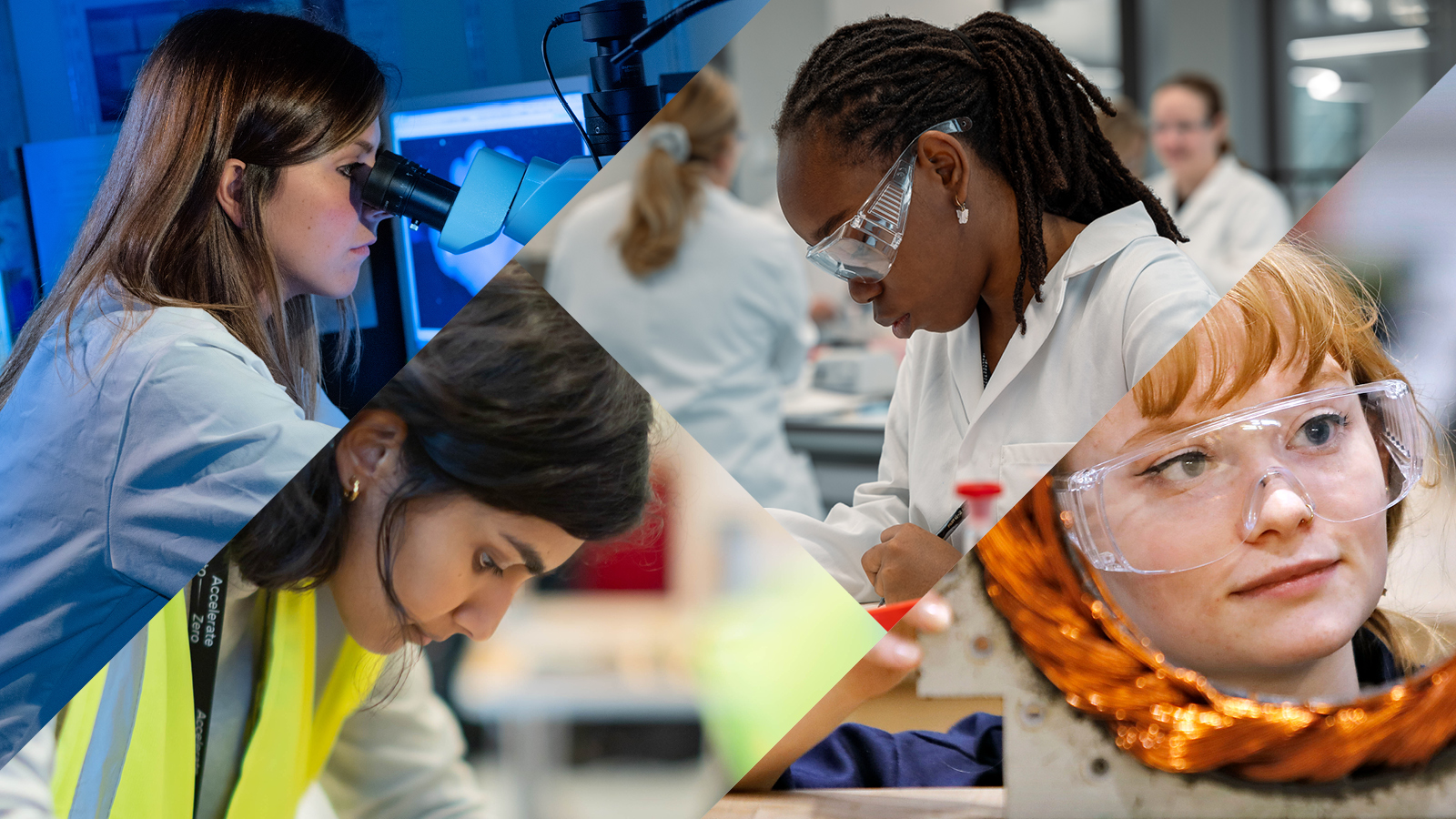
Photos: UHI Shetland, BE-ST, Abertay University, University of Edinburgh
11 February is a day worth celebrating every year, for me, for two significant reasons.
Firstly, the 11th of February has been designated ‘The International Celebration Day of Women and Girls in Science’ and for me there is a lot to celebrate both personally and professionally. I have enjoyed a fulfilling career in STEM (Science, Technology, Engineering, Maths) as a teacher, researcher, leader and now endeavour to give back to those contributing across the science landscape.
I have achieved several firsts throughout my working life such as first female President of the Royal Society of Chemistry (in 170 years) and head of the College of Science and Engineering at the University of Edinburgh. I was one of BBC 100 women in 2014, was awarded a CBE and have been admitted as a Fellow of the Royal Society of Edinburgh (RSE).
It has been a pleasure and a privilege to work, over the years, with academics, students, non-scientists, politicians and the public. It has been a stimulating and rewarding time and I would now want many others to experience the excitement and satisfaction such a career brings.
However, I know that the playing field is not level and that many women and girls have not had the opportunities I have had and that some female colleagues felt so frustrated by the obstacles in their path that they have left STEM areas of work. What a waste. Inequalities are evident at school level – only 27% of candidates presented for Higher Physics in 2025 were girls, 21% of entrants in Computing and 12% in Engineering Science (although overall numbers are very low). In marked contrast Biology and Chemistry percentages were 69% and 60% respectively.
Indeed, the proportion of girls taking individual STEM subjects has been depressingly consistent recently regardless of the efforts of teachers, professional bodies and others. It needs a systemic effort to promote gender equality in education from teachers, careers advisors, parents, policy makers and society to shift the dial. Exhibitions such as the RSE Women in Science in Scotland which toured the country help but we need more sustained, intensive interventions.
The picture gets worse at undergraduate degree level and the proportion of women decreases dramatically at higher academic positions with a stark drop from lecturer to professorial roles. In 2022 14% of professors were female in maths, physics and chemistry. The loss of women from consecutive stages in their career path is often described as the leaky pipeline.
There has been a strong focus on gender equality in the academic workplace in recent years but progress has been described as ‘slow and piecemeal’. The lack of women in senior leadership roles does not reflect the improvements in younger cohorts – yet. But we can’t afford to let time be the solution – if we do that then it will be my great, great granddaughters who may enjoy a truly diverse workforce.
But why does it matter? Why should we be concerned that only around a quarter of the core STEM workforce in the UK in 2020 was female (whereas they comprise 52% of the total workforce)? Shouldn’t we query why 73% of female graduates leave the STEM sector they qualified in? Does Scotland need more women and girls with STEM skills?
Without doubt there is a serious STEM skill shortage in Scotland at present with over 50% of new jobs requiring STEM skills. The UK government has suggested that the research and development (R&D) sector will need an additional 150,000 researchers and technicians by 2030 to sustain the UK’s ambition for R&D. And the Institution of Engineering and Technology (2021) identified that 49% of engineering businesses experienced difficulties in recruiting personnel with the necessary skills. Consider that it has been estimated that doubling women’s contributions to the skills base equates to an increase of £170m/annum to the Scottish economy. And consider that there is considerable evidence that increasing the diversity in the makeup of a team results in its greater effectiveness, efficiency, performance and outcome success. Does it not then make sense to tap into the underrepresented female resource and make STEM careers for women more attractive, attainable and achievable?
My other reason for celebrating the 11 February is that it is my husband’s birthday – and I want to thank him, my family, friends and colleagues for all the help and support they have given me whilst I followed my dreams of a career in STEM. I hugely appreciate their help, guidance, mentoring, sponsorship and championing and I now offer the same to younger colleagues. Giving back is vital to push forward the women in STEM agenda. At present, we need to support women in STEM.
So, I call on all of us on the 11th of February to celebrate women and girls in science but to use the remaining 364 days of the year to enthuse girls to study STEM subjects at school, to encourage young women as they advance their STEM learning at college, university or the work place and to support science based researchers and practitioners to take up senior, leadership positions. Thus, we will help provide Scotland with the skilled workforce it needs to thrive, build a sound economic future and discover solutions to the challenges our society faces.
Professor Lesley Yellowlees is a Fellow of the Royal Society of Edinburgh.
She is a former SFC board member and chaired SFC’s Research and Knowledge Exchange Committee until October 2025.